
Let’s cut to it: payday loans have a reputation — and not a great one. Predatory. Sky-high interest. Desperate people getting taken for a ride. And to be honest? A lot of that is true. But it’s not the whole story.
If you’re here, you’re probably trying to understand what payday loans actually are, how they work, and whether there’s ever a situation where one makes sense. This guide breaks it all down — in plain English, with no judgment and no sugarcoating.
What Is a Payday Loan?
A payday loan is a short-term, high-interest loan, typically for a small amount — often $100 to $1,000 — that’s designed to carry you until your next paycheck. The entire balance is usually due in two to four weeks.
You don’t need good credit. In fact, many lenders won’t even check it. What they care about is that you have a job, a bank account, and the ability to repay quickly.
Here’s how it usually works:
- You borrow $500 from a payday lender.
- You write a postdated check or give them access to your bank account.
- Your full payment — plus a hefty fee — is due on your next payday.
Simple? Sure. But that simplicity often comes at a steep price.
How Common Are Payday Loans?
More common than you might think.
According to Pew Charitable Trusts, around 12 million Americans use payday loans each year. They’re particularly common among:
- People with limited access to traditional credit (low credit score or no credit history)
- Those living paycheck to paycheck with little to no emergency savings
- Individuals in financial crises — like car repairs, medical bills, or sudden job loss
They’re legal in most U.S. states, though regulations vary wildly. Some states cap interest rates or restrict rollovers; others allow lenders to charge triple-digit APRs with minimal oversight.
When (If Ever) a Payday Loan Makes Sense
Let’s be clear: most financial experts don’t recommend payday loans as a first (or even second) option. But in some situations, they can be a stopgap — not a solution, but a bridge.
A payday loan might make sense if:
- You have a one-time, unavoidable emergency expense
- You’re certain you can repay it in full on your next payday
- You’ve exhausted safer alternatives (credit union loan, family help, payment plans)
What you don’t want is to get stuck rolling over your loan because you couldn’t repay — that’s how people fall into the debt trap.
The Real Costs: Let’s Talk Numbers
Here’s the part that trips people up: fees feel small, but the APR is massive.
Most payday lenders charge around $15 to $20 per $100 borrowed. That might sound manageable — until you annualize it.
Let’s say you borrow $500 with a $75 fee. That’s 15% of the loan due in two weeks. If you annualize that? You’re looking at an APR over 390%.
| Loan Amount | Typical Fee | Total Due in 2 Weeks | Effective APR |
|---|---|---|---|
| $300 | $45 | $345 | ~391% |
| $500 | $75 | $575 | ~391% |
| $800 | $120 | $920 | ~391% |
Miss your payment? Many lenders tack on more fees, or roll your balance into a new loan. That’s where the cycle begins — and it gets ugly fast.
Pros and Cons of Payday Loans
Let’s keep it real. There are upsides — but they come with serious risks.
Pros:
- Fast access to cash (often same-day)
- No credit check required
- Simple application process
- Available even with low income or poor credit
Cons:
- Extremely high interest rates
- Short repayment periods
- Risk of repeat borrowing and debt traps
- Potential for aggressive collection practices
- Not available or restricted in many states
Real-World Payday Lenders: What to Know
Here are some well-known payday lenders in the U.S., including how they operate and what you should watch out for.
| Lender | Reputation | APR/Fees | Notes |
|---|---|---|---|
| Ace Cash Express | Mixed | Varies by state, typically 300–500% APR | Long history, some regulatory issues in past |
| Check Into Cash | Mixed | ~$15 per $100 borrowed | Operates in many states, solid web interface |
| Speedy Cash | Mixed to negative | ~400% APR | Fast approvals, but known for high rollover rates |
| Advance America | Mixed | Up to $25 per $100 borrowed | Owned by a major international firm; fees vary a lot |
| OppLoans (not traditional payday) | More favorable | ~160% APR | Longer terms, installment-based; better option than payday in some cases |
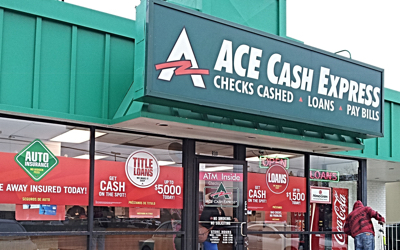
These lenders are regulated differently depending on your state. Some states — like New York and New Jersey — ban payday loans outright. Others allow them with few restrictions.
Smart Alternatives to Payday Loans
Before you sign anything, see if you can try one of these instead:
- Local credit union loan: Small-dollar emergency loans with far lower APRs
- Employer advance or paycheck app: Apps like EarnIn or DailyPay offer early access to your own wages
- Payment plan with creditor: Many hospitals, mechanics, and utility companies will let you pay over time
- Buy-now-pay-later platforms: For specific purchases (but tread carefully here too)
- Friends or family: Not always comfortable, but far cheaper in the long run
If You Already Have a Payday Loan
Don’t panic — but don’t ignore it either.
- Prioritize repayment: These loans snowball fast
- Talk to the lender: Ask if they offer extended repayment plans
- Check your state’s laws: Some states give you rights around rollovers or default protections
- Consider a credit counselor: Look for a nonprofit advisor, not a debt settlement scam
The Bottom Line
Payday loans are like power tools: helpful in very specific scenarios — and dangerous in the wrong hands. If you’re using one with a clear plan to pay it off in full, it might be the least-bad option available. But if you’re stuck in a cycle, it’s time to look for an exit ramp.
Understand what you’re signing. Know the real cost. And if you can, explore every safer option first.